
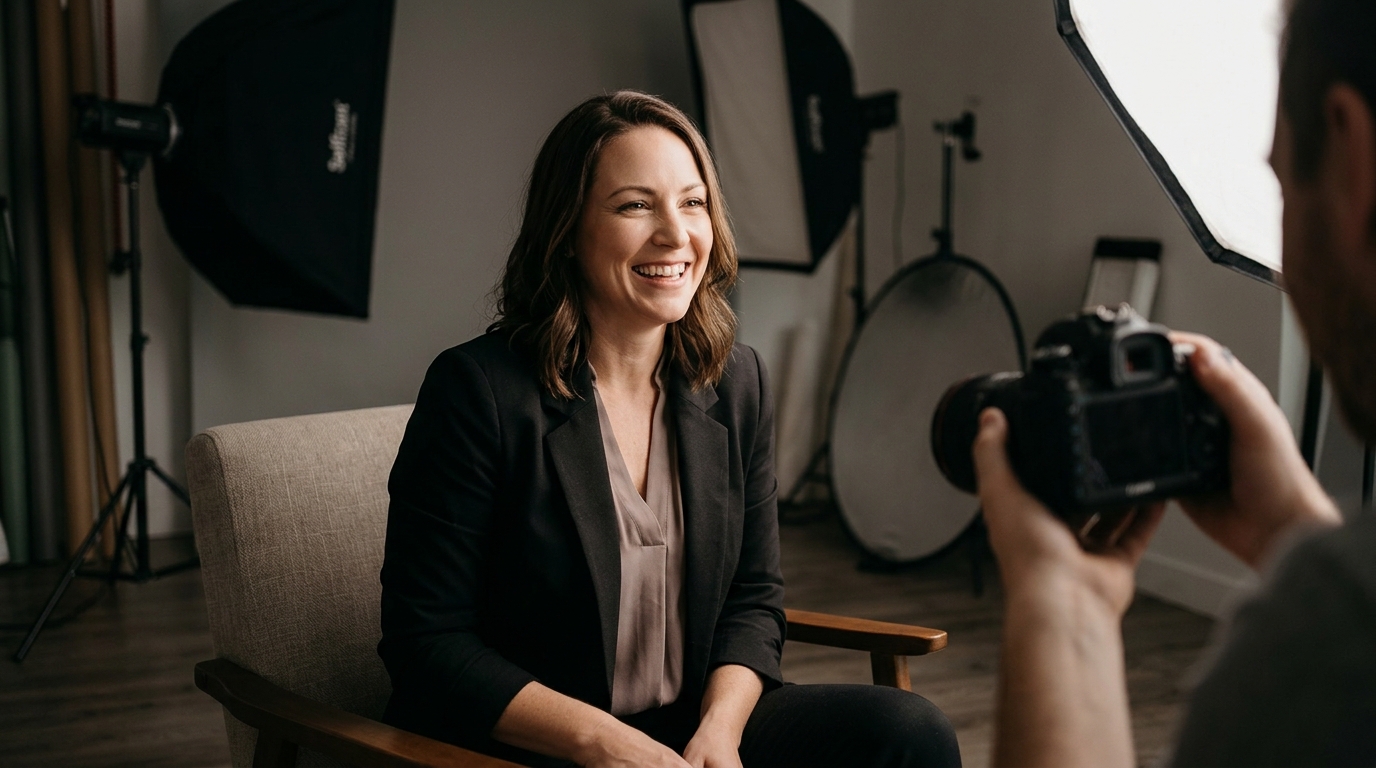
Professional studio lighting improves portrait photos by controlling shadows, enhancing skin tones, and creating depth that natural light often lacks. At SELFOGRAPHY in Surrey, BC, our private studio sessions use calibrated lighting setups to ensure every subject looks their best. This precision matters because it transforms a casual snapshot into a timeless, high-quality image that captures your true character without harsh glare or uneven exposure. For additional details, review the selfography ca.
Understanding Studio Lighting Basics
Studio lighting is a controlled illumination system designed to manipulate how light interacts with a subject. Unlike ambient room light, which is unpredictable and often flat, studio lighting allows photographers to shape the mood and clarity of an image. This control is the foundation of professional portrait work. For additional details, review the .
Achieving Accurate Skin Tones
One of the most critical aspects of portrait photography is rendering skin tones accurately. Natural light can often introduce color casts, making skin appear too yellow, too blue, or unevenly lit. Professional lighting corrects these issues by using color-corrected light sources that mimic ideal daylight or warm indoor tones. For additional details, review the Customer Experience.
This precision ensures that your complexion looks natural and vibrant in the final image. In our Surrey studio, we calibrate our lights to match the specific undertones of each client. This attention to detail means you receive photos where your skin looks healthy and true to life, rather than washed out or artificially colored. For additional details, review the Frequently Asked Questions.
Creating Depth and Dimension
Flat lighting can make a face appear two-dimensional, losing the natural contours of the nose, cheeks, and jawline. Professional studio lighting introduces strategic shadows to create depth and dimension. By positioning lights at specific angles, photographers can sculpt the face and highlight its best features. For additional details, review the About.
This technique is particularly effective for headshots and family portraits. For instance, a key light placed at a 45-degree angle creates a classic, flattering look that adds volume to the face. The result is an image that feels dynamic and engaging, rather than static and flat. This depth is a key reason why professional portraits hold up well in both digital and print formats.
Ensuring Consistency and Reliability
Natural light changes constantly due to weather, time of day, and seasonal shifts. This variability makes it difficult to achieve consistent results across multiple shots. Studio lighting, however, remains stable throughout a session. This reliability allows photographers to focus on capturing expressions and poses without worrying about sudden changes in exposure.
For clients booking a session at SELFOGRAPHY, this consistency means you can expect uniform quality across all your images. Whether you are taking ten shots or fifty, the lighting remains constant. This predictability is essential for creating a cohesive set of photos that work well together in albums or on social media.
Key Takeaways
- Studio lighting controls shadows and highlights to create flattering portraits.
- Color-corrected lights ensure accurate and natural skin tones.
- Strategic lighting angles add depth and dimension to facial features.
- Consistent lighting provides reliable results across multiple shots.
- Professional setups eliminate the unpredictability of natural light.
- High-quality lighting enhances both digital and print outputs.
Frequently Asked Questions
What is the main difference between studio lighting and natural light?
Studio lighting is controlled and consistent, allowing for precise manipulation of shadows and highlights. Natural light is variable and often unpredictable, which can lead to uneven exposure and color casts in portraits.
Does professional lighting make skin look better?
Can studio lighting create different moods?
Absolutely. By adjusting the angle and intensity of lights, photographers can create moods ranging from soft and romantic to dramatic and bold. This flexibility is a key advantage of studio setups. Learn more: selfography ca.